

Why Project Based Learning Matters
Why Project Based Learning Matters: A Journey Through Wonder, Curiosity, and Real-World Discovery

By Armitage House — House of Wonder
A Seed of Wonder
Project Based Learning at Armitage House didn’t start with a textbook or a school standard. It began the same way all great things do — with a spark of curiosity.
One question.
One experiment.
One moment when a child looks at the world and thinks,
“Wait… what if?”
From the moment my son was born, our home became our lab. Our sanctuary. Our research center. A place where questions were not interruptions, but invitations. And through every experiment we attempted together — from mapping moon phases to extracting DNA from bananas — I saw something unmistakable:
Children learn best when they are doing, not memorizing.
They absorb more when their hands are involved.
They understand more when the world becomes their classroom.
They remember more when they build the learning themselves.
Project Based Learning wasn’t an academic choice for us — it was instinct. It was natural. It was the way my son’s brain lit up every time a question turned into an adventure.
And that is how Armitage House began.

From Pregnancy to Project-Based Philosophy
Before my son ever took his first step, I was already deep in research.
Neuroscience.
Montessori.
Reggio Emilia.
Constructivism.
Child-led learning.
Curiosity theory.
Learning-by-doing.
Behavioral psychology.
The science of play.
Creativity research.
As an industrial engineer trained in systems thinking, I was comfortable with experimentation. I was used to observing variables, noticing patterns, adjusting processes, and optimizing outcomes.
But as a mother, this research had a deeper purpose.
I wanted to understand how human potential is built.
What makes a child not just capable, but imaginative.
Not just intelligent, but confident.
Not just knowledgeable, but alive with curiosity.
Every play session became data.
Every question became a hypothesis.
Every messy project became a clue.
And again and again, the research pointed to the same truth:
Children become brilliant when they build connections with their hands, hearts, and minds — all at the same time.
That is the heartbeat of Project Based Learning.
The Science Fair That Changed Everything
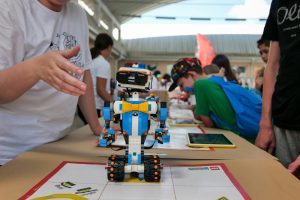
In first grade, my son didn’t just “do a project” — he built something original. Real. Meaningful.
He used satellite data to solve a real-world problem.
He translated curiosity into innovation.
He applied tools from engineering, science, creativity, and logic.
He built something that had never been done.
That project won first place.
It also won the “Fascinated Favorite” award from fellow students.
Even more astonishing — it led to a scientific discovery and a pending patent.
From our kitchen table.
From a project he cared deeply about.
That was the final confirmation:
Project Based Learning doesn’t just teach lessons.
It builds thinkers.
Inventors.
Problem-solvers.
Visionaries.
Children who don’t just study the world — they change it.
What Project Based Learning Really Does for Children
Project Based Learning (PBL) is not a curriculum trend. It’s not a method. It’s not a fancy acronym.
It is a way of being in the world.
Here’s what it cultivates at a deep level:
1. Curiosity That Doesn’t Fade
Children ask more questions.
Better questions.
More creative questions.
And PBL teaches them what most educational systems forget:
Questions are more powerful than answers.
2. Real Problem-Solving Skills
Instead of memorizing facts, children are solving meaningful problems with:
• experimentation
• design
• collaboration
• iteration
• creativity
• resilience
• logic
This is 21st-century learning.
3. Confidence Through Creation
When a child builds something — a model, a report, a sculpture, a blueprint, a machine, a hypothesis — something shifts inside them.
They start seeing themselves as capable.
4. Integration of Subjects
A PBL project is never just one thing.
A single experiment blends:
• science
• writing
• math
• storytelling
• art
• engineering
• logic
• philosophy
This is how learning becomes whole.
5. Joy, Engagement, and Flow
Children lose track of time when they are building.
Their brain enters the state researchers call “flow,” where deep learning happens naturally.
This is where confidence grows.
This is where intelligence blossoms.
This is where wonder becomes a habit.
Why PBL Is the Heart of Armitage House
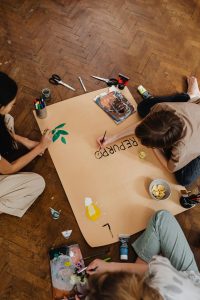
Armitage House wasn’t built on worksheets or scripted lessons.
It was built on moments of discovery — the kind that children never forget.
We create:
• science experiments that glow, fizz, and transform
• story-driven challenges
• engineering adventures
• hands-on projects that matter
• creative explorations that become memories
• curriculum that feels like an invitation, not an assignment
Because we believe that learning should feel like magic.
And magic happens when children are building something meaningful with their own hands.
Why Project Based Learning Matters Now More Than Ever
Our world is changing.
Children today will need to be:
• innovators
• problem-solvers
• creators
• thinkers
• collaborators
• visionaries
Not just test-takers.
Project Based Learning prepares them for that world — the real one.
It teaches them to adapt.
To dream.
To figure things out.
To think independently.
To combine creativity with logic.
To trust their ideas.
To build with courage and curiosity.
These are the children who will change the future.
The next scientists.
The next philosophers.
The next Da Vincis.
The next engineers.
The next explorers.
The next artists.
And the next kids who extract DNA in their kitchen and turn it into a scientific milestone.
From Our House to Yours
Armitage House is more than a curriculum.
It’s a way of seeing the world.
It’s a home for:
dreamers
builders
makers
innovators
and families who believe that imagination can shape a life.
We’re here to help you bring Project Based Learning into your home — simply, joyfully, beautifully.
Because when a child is given the chance to create, everything changes.
At Armitage House, we are building a global movement of families and educators who believe learning should feel magical and meaningful.
As Albert Einstein reminded us,
“Imagination is more important than knowledge.”
And here, imagination will always lead.
Keep sparking wonder,
Your Armitage House Family
New posts

When a Classic Game Teaches Strategic Thinking
September 17, 2025

When a Simple Game Becomes a Thinking Tool
August 10, 2025

A Parallel Path: Where Clarity, Observation, and Systems Took Root
September 3, 2025
Leave a comment