If you can talk, you already have a game.
Twenty questions is a guessing game. One person thinks of something. The others may ask up to twenty questions that can be answered with “yes” or “no.” The aim is to find the answer before the questions run out.
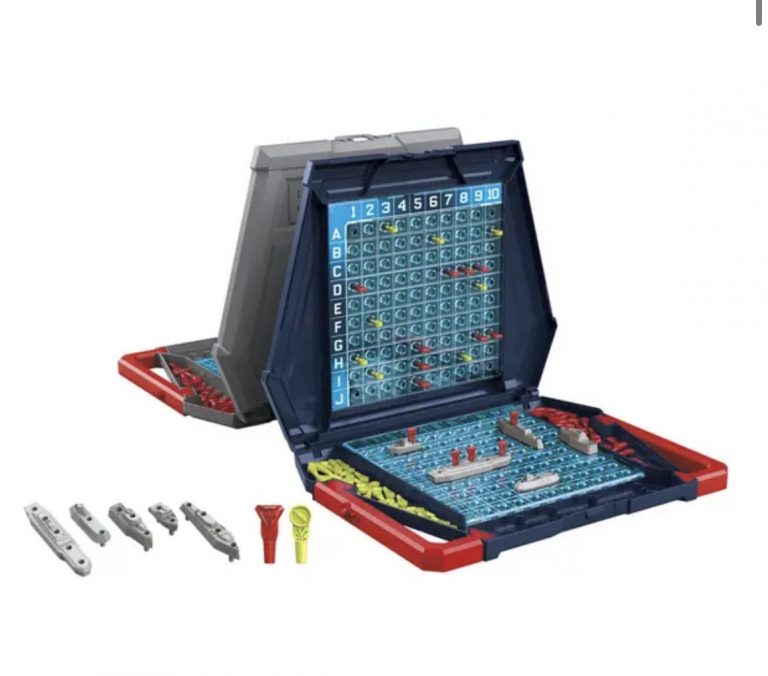
Today’s thinking move is to ask a better question: one that cuts a large set of possibilities into smaller ones. Battleship uses the same kind of narrowing, one guess at a time. For a game rewarding a pause, try Mancala.
How to set it up
Decide who will think of the secret thing first. That person should choose something the others could reasonably guess. An animal, a food, a household object, or a place you all know will work. “A spoon” is a better first secret than a private memory no one else could reach.
The guessers may ask questions that can be answered “yes” or “no.” The thinker answers honestly. “I don’t know” is allowed if the question cannot be answered fairly. Then the question need not count.
You can play with two people or with a small group. Keep a tally of the questions, from 1 to 20. A younger child may need help. You can offer a starter: “Is it a living thing?”
How to play
The thinker says, “I am ready,” once the secret is chosen. The first question should usually be broad. “Is it a living thing?” “Is it something in this house?”
After each answer, pause. What do you now know? What can you stop considering? Later questions can grow more specific. “Is it something we use in the kitchen?” “Is it made of metal?”
You may guess the answer itself at any time. A direct guess, such as “Is it a spoon?”, counts as one of the twenty questions. If you are right, the guessers win. If you are wrong, the game continues.
If twenty questions have been asked and the secret is still hidden, the thinker tells what it was. Then you can switch roles and play again.
That is the whole rule set. The interest is in the shape of the questions.
What the game quietly teaches
A first game is often a list of direct guesses. “Is it a dog?” “Is it a cat?” “Is it a horse?” Those questions can work, but they are slow. Each one tests only a single item.
A stronger question splits the field. “Is it a living thing?” can rule out half of what you might have been thinking. You can simply ask, “Will this answer help us drop a whole group of ideas?”
Once you have a group, you can narrow it. If it is a living thing, is it an animal? If it is an animal, is it a pet? Each answer should leave you with a smaller pile of possibilities.
You can think out loud without taking over the turn. “If they say no, what will we still have left?” Then wait.
The game also trains honest answers. The thinker should not change the secret mid-game. If you thought of a spoon, it stays a spoon.
This kind of sorting sits close to an earlier practice, Always, Sometimes, or Never?.
Try it at home
Play one round with a simple household secret. If you still have time, switch roles and play again.
Ask your child: “Before you guess the thing itself, what question would rule out a whole group?”
Age ladder (examples, not stories about a particular child):
- Little ones (about 3 to 5): Keep the secret to things in the room. Help them ask one broad question first, such as “Is it something we wear?”
- Middle years (about 6 to 10): Play a full round. After a few questions, name what you already know. Then let them choose the next question.
- Teens (about 11 to 18): Play with a slightly harder secret. Afterward, mark which questions split the field and which only tested a single guess.
From Our House to Yours,
Keep sparking wonder,
Your Armitage House Family
Join the Wonder Crew
Get new Attic posts and simple ideas to try at home, delivered to your inbox.