When Technology Becomes a Teacher
The Story Behind Armitage House: Where Wonder Meets Worldwide
A Seed of Wonder
Armitage House did not begin with a curriculum, a platform, or a business plan.
It began with an object.
A small chess computer that once belonged to my father.
When he died, I was eleven years old. The computer became mine, not as inheritance, but as closeness. It was something he had chosen, used, and valued. Something that had belonged to his mind before it belonged to my hands.
At the time, I did not know how to play chess.
Not even the basics.
I did not know how the pieces moved. I did not know the rules. I did not know what check or checkmate meant. What I did know was that this machine mattered to him. And after he was gone, it mattered to me.
That quiet attachment became my first experience of wonder rooted in technology.
The Machine That Met Me Where I Was
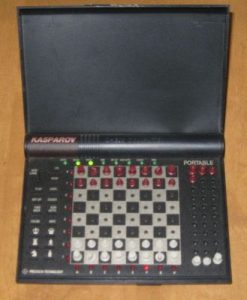
The computer was a Kasparov Portable Advanced Trainer, sometimes called the Kasparov Cavalier. It was made by Saitek and branded with the name of Garry Kasparov.
By today’s standards, it was simple.
By the standards of its time, it was extraordinary.
It had:
-
A pressure-sensitive chessboard with LED lights that revealed moves
-
Multiple difficulty levels that adapted as skill improved
-
Training modes that punished careless play
-
No internet
-
No graphics
-
No voice
-
No distractions
It did not explain chess in words.
It taught through consequence.
To progress, you had to think better.

Learning From the Beginning
I started from zero.
I learned how each piece moved by pressing buttons and watching the board respond. I learned the knight’s strange geometry, the bishop’s lifelong loyalty to a single color, the rook’s need for open lines. I learned that the smallest piece, the pawn, carried the possibility of transformation.
The machine never assumed I knew anything.
It met me exactly where I was.
I was not learning through explanation or instruction. I was learning through interaction. Through trial. Through attention. Through repetition.
Every mistake became information.
Every loss became a lesson.
Especially the losses.
A Quiet Form of Bonding
That year, the computer became more than a teacher.
It became a bridge.
Each time I opened it, I felt closer to my father. I imagined him sitting where I sat, thinking the way I was learning to think. It was a quiet form of bonding. Focused. Steady. Intimate.
Grief did not show up as sadness during those games.
It showed up as dedication.
For an entire year, that computer was my only opponent. I did not play a single human being. I played the board, the machine, and myself.
Rising to the Machine
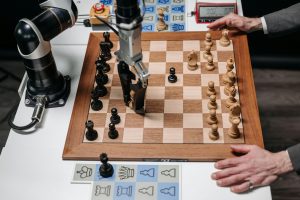
The only way to learn more from the computer was to play better.
It did not explain itself. It revealed itself through response. The more carefully I played, the more clearly I could see how it was thinking.
If I played carelessly, the game ended quickly and taught me very little.
If I played attentively, patterns emerged.
Sacrifices.
Traps.
Long-term positioning.
Consequences that appeared several moves later.
It was as if the machine met me at the level of my attention.
As my skill grew, its intelligence became legible. I began to anticipate its moves, not by memorizing sequences, but by learning how it thought. The board stopped feeling random. It started to feel inevitable.
That is when learning accelerated.

The Unexpected Test
In middle school, an EI teacher noticed my interest in chess and invited me to play a game.
To him, it was casual.
To me, it was familiar.
I played the way I always had. Calmly. Intentionally. Focused on the board, not the person across from me.
I won.
He told me I should compete. That I had real potential.
What he did not know was that my training had already been happening quietly for a year. What he did not know was that I had learned chess from the very beginning, from a machine, without ever playing a human being.
The skill did not appear suddenly.
It had been built patiently, move by move, in silence.
What the Machine Really Taught Me
That chess computer did not simply teach me how to play a game.
It taught me how to learn.
It showed me that intelligence does not require ego. That feedback does not need emotion to be effective. That mastery can be built privately, without performance or comparison.
It taught me patience.
Focus.
Pattern recognition.
Emotional regulation.
It taught me that understanding is not delivered through explanation.
It is earned through effort.
The machine never lowered itself to teach me.
I had to rise.
And in rising, I was not becoming mechanical.
I was becoming more human.

Why This Matters Now
Today, many worry that technology distances children from humanity.
My experience taught me the opposite.
When used with intention, technology can create safe spaces for learning. It can allow children to build mastery at their own pace, without judgment. It can support curiosity, discipline, and deep thinking long before confidence appears on the outside.
That computer did not replace human connection.
It carried one forward.
It held my father’s presence long enough for me to grow into myself.
Technology did not think for me.
It taught me how to think.
How This Became the Mission of Armitage House
This experience is not separate from my work today.
It is the foundation of it.
Armitage House exists because learning should feel the way that chessboard felt to me: focused, meaningful, respectful, and alive with possibility.
At Armitage House, we believe:
-
Learning begins with wonder
-
Children deserve tools that meet them where they are
-
Mastery grows through curiosity, not pressure
-
Technology should deepen thinking, not replace it
-
Education must honor both intellect and humanity
We design learning experiences that invite children to rise. Not to be told what to think, but to discover how thinking works.
From Our House to Yours
As Tara Juniper, I build educational spaces the way I learned to learn.
Through exploration.
Through feedback.
Through patience.
Through trust in a child’s capacity.
Chess taught me strategy.
Technology taught me discipline.
Grief taught me meaning.
Together, they shaped a vision of education that is not loud, rushed, or performative.
But deep.
Intentional.
Human.
Children do not need less technology.
They need better relationships with it.
And when that relationship is built with care, technology does not take something away from childhood.
It gives it structure, confidence, and room to grow.
That is where Armitage House lives.
Where wonder meets worldwide.